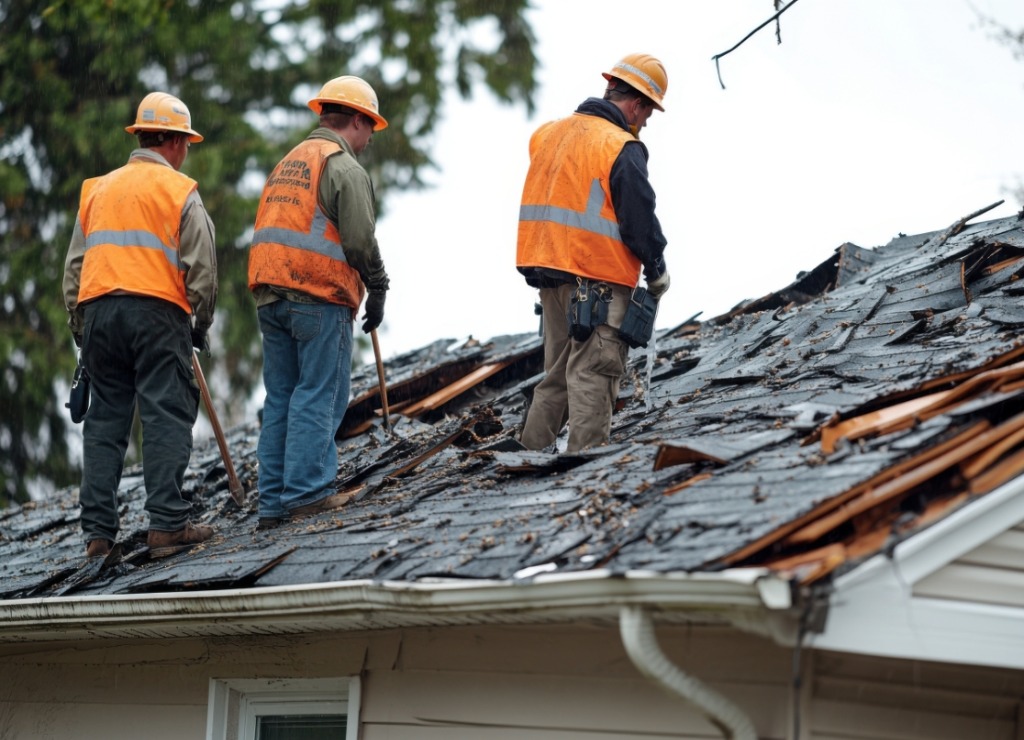
Take photos and video of the roof, ceilings, walls, and any fallen trees before anything is moved. Walk room by room and list what is damaged. Keep receipts for emergency work such as tarping, board-up, and water extraction, and for temporary lodging if your home is not livable. This record is the base of your claim, and it is much harder to rebuild after cleanup starts.
Call your insurer and describe what happened. Get a claim number, and write down who you spoke with and when. Ask what the next steps are and what documents they need from you. The sooner the claim is open, the sooner the rest of the process can move.
The adjuster inspects the damage and prepares an estimate. If you can, walk the property with them. Having your contractor there helps, because we can point out hidden damage and provide a detailed scope of work. If the adjuster estimate differs from your contractor scope, ask for a review and share your documentation.
Stuart documents the damage, prepares a detailed scope, meets your adjuster, and follows up. You open the claim, keep your receipts, and approve the scope of work. Coverage depends on your policy, and your insurer decides what is covered, which differs in each claim. We never promise an outcome. We promise thorough documentation and follow-up.
Once the scope is agreed, repairs move forward. Keep all paperwork in one place: claim number, estimates, invoices, and photos. If new damage shows up during repairs, document it and tell your insurer and your contractor right away.
Technical review: Stuart Home Improvement LLC, GAF Certified, NJ HIC License 13VH11792300
Documentation, a detailed scope, and adjuster meetings, from our Watchung team.
Hi! I'm Leora from Stuart Home Improvement. Can I help you with anything?
